
Las Vegas Home Buyer Checklist 2026: 15 Essential Steps
Buying a home in Las Vegas right now means navigating a market where the median price sits at $473,875 for single-family homes as of April 2026 (LVR via Nevada Business Magazine), and roughly 1 in 5 competing buyers pays all cash. That’s a lot to manage if you’re doing it for the first time.
The good news? Nevada has some of the strongest buyer assistance programs in the West, and prices have softened slightly from their 2025 highs. With the right approach, and the right order of operations, this is manageable. This checklist walks you through every step, with current data and Las Vegas-specific details that actually matter on the ground.
Browse our Las Vegas first-time homebuyer resources for additional guides on financing, neighborhoods, and the buyer’s journey.
Key Takeaways
- Las Vegas median home price: $473,875 (April 2026, LVR), down 1.3% year-over-year, giving buyers slightly more negotiating room
- Nevada’s Worker Advantage program offers up to $20,000 for essential workers; Home Is Possible grants 2–4% of the loan amount to most first-time buyers
- 22.1% of Las Vegas sales close all-cash, get fully pre-approved before you tour a single home
- Closing costs run 2–3% of purchase price (~$9,500–$14,200 at the current median)
- Financed purchases close in 30–45 days after contract; the full process typically takes 8–12 weeks
1. Check Your Credit Score and Financial Health
Your credit score is the single biggest lever on your mortgage rate, and it determines which Nevada programs you qualify for. FHA loans require a minimum 580 FICO for the 3.5% down payment option; scores from 500–579 still qualify, but require 10% down (HUD.gov). For conventional financing, Fannie Mae dropped its hard 620 floor in November 2025, though most lenders still apply that threshold in practice (National Mortgage Professional, 2025). Before you talk to any lender, check all three bureaus. Not just one.
Pull your full credit report at AnnualCreditReport.com. Errors appear more often than you’d expect, and disputing them takes time you don’t want to burn while a home sits under contract. For a deeper breakdown of financing options, see our Las Vegas credit and financing guide. Read more in our related guide: first-time home buying las vegas.
Calculate your debt-to-income (DTI) ratio: divide total monthly debt payments by gross monthly income. Most Nevada lenders want this below 43%, though certain loan programs allow up to 50% with compensating factors.
Also review your savings with three buckets in mind: down payment, closing costs, and a post-close emergency reserve. At the current Las Vegas median, plan for $9,500–$14,200 in closing costs alone, Nevada buyers typically pay 2–3% of the purchase price (CFPB, 2025).
Citation capsule: FHA loan standards from HUD require a 580 FICO minimum for 3.5% down, or 500 with 10% down. In November 2025, Fannie Mae removed its hard 620 FICO floor for conventional loans, though most Nevada lenders still apply a 620 overlay. Buyers with scores below 620 should focus on FHA-approved lenders and Nevada Housing Division programs. (HUD.gov; National Mortgage Professional, 2025)
2. Determine Your Budget and Down Payment Options
Nevada offers some of the most accessible first-time buyer programs in the country, and several can be stacked to significantly reduce what you need to bring to closing. The Nevada Housing Division’s flagship Home Is Possible (HIP) program provides a 2–4% grant of the total loan amount, fully forgivable after three years, with income limits up to $105,000 (or $135,000 with multiple borrowers) and a 640 minimum FICO (HomeIsPossibleNV.org).
The 2025 Worker Advantage program, passed via Governor Lombardo’s AB540, offers eligible essential workers (healthcare, education, public safety, construction) up to $20,000 in a no-interest, no-payment 30-year second mortgage, with a home price limit of $806,500 (Nevada.gov). This is a genuinely significant program, it doesn’t require being a first-time buyer.
At the current $473,875 median, the numbers break down like this:
Also factor in Las Vegas-specific carrying costs: summer electric bills run $250–$400/month, and HOA fees in master-planned communities like Summerlin or Southern Highlands add $50–$400/month depending on the community tier.
Citation capsule: Nevada’s Worker Advantage program (AB540, 2025) provides up to $20,000 in no-interest, no-payment down payment assistance to eligible essential workers, a non-forgivable 30-year second mortgage with no first-time buyer requirement and a $806,500 home price cap. The Home Is Possible program separately offers 2–4% forgivable grants. Together, these programs can reduce or eliminate out-of-pocket down payment for thousands of Nevada buyers annually. (Nevada.gov; HomeIsPossibleNV.org)
3. Get Pre-Approved, Not Just Pre-Qualified, for a Mortgage
Here’s something many buyers learn the hard way: in Las Vegas, a pre-qualification letter is nearly worthless in a competitive offer situation. You need a fully underwritten pre-approval. Why? Because 22.1% of local property sales closed all-cash in April 2026 (LVR via Nevada Business Magazine), meaning you’re often competing against buyers who have zero financing contingency at all.
Contact 2–3 Nevada lenders and compare rates, origination fees, and processing timelines. Bring recent pay stubs, two years of tax returns, two months of bank statements, and employment verification letters. Ask each lender specifically whether they’re an approved Nevada Housing Division lender, not all of them are, and that matters if you want HIP or Worker Advantage funds.
Once your pre-approval is in hand, protect it. No new credit lines, no job changes, no large unexplained deposits. Lenders re-verify your credit and employment right before closing, anything unusual triggers a new round of conditions.
4. Choose Your Las Vegas Neighborhood Carefully
Las Vegas spans 83 zip codes, and the difference in character, price point, and school quality between them is massive. Don’t pick a neighborhood from a Google Map. Drive through it at different times, a Thursday morning and a Saturday night can feel like two different cities.
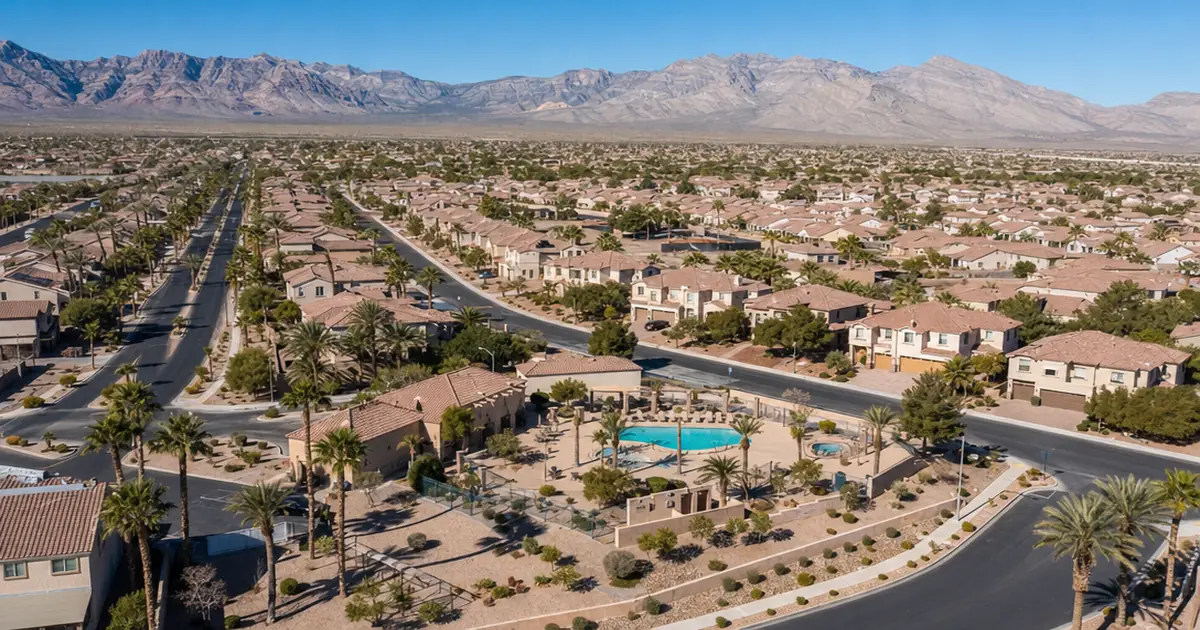
A quick orientation for buyers:
- Summerlin (West/Northwest): Master-planned, top-rated schools, Red Rock Canyon access, mountain views, $550k+ median, higher HOAs, the premium tier for a reason, but you pay for it
- Henderson: Family-focused, slightly lower price point than Summerlin, strong employment corridor near Allegiant Stadium and Henderson Executive Airport
- North Las Vegas: Most affordable entry point in Clark County, older housing stock, rapidly developing
- Sunrise Manor / Whitney: Closer to the Strip and airport, older neighborhoods, strong rental comps if you’re also thinking about investment potential
Clark County School District zones matter significantly if you have kids. Two homes in the same zip code can feed into very different schools, check GreatSchools.org by exact address. For a deeper breakdown of neighborhoods by lifestyle and budget, see our Las Vegas homebuyer resources.
5. Find a Real Estate Agent with Real Las Vegas Knowledge
The agent you choose has a direct impact on which offers win and what you ultimately pay. Ask for their active listing count in your target neighborhoods, their average sale-to-list price ratio for buyers, and specifically how they’ve helped financed buyers compete against cash offers.
Verify their Nevada real estate license is current via the Nevada Real Estate Division portal. Check Google and Zillow reviews, and ask for references from buyers who closed in the last 90 days. The market shifts fast enough that experience from two years ago tells you less than you’d think.
Make sure they understand HOA CC&Rs, master-planned community requirements, and how to read a neighborhood’s absorption rate. Those details surface quickly once you’re under contract, and you don’t want to be learning them together for the first time.
6. Start Your Home Search with Market Data in Mind
When the market moves, days-on-market tells you more than asking price alone. As of early 2026, homes in Clark County spend roughly 45–67 days on market, meaning the market has softened from its 2022–2023 peak, but well-priced homes in the right neighborhoods still move fast (LVR, 2026).
Set up automated MLS alerts for your target areas at your exact criteria. When something hits that matches, don’t wait a week to see it. In Summerlin and Henderson, good homes under $550k routinely go under contract within days of listing.
Schedule showings on weekends to see neighborhoods during peak activity. Then come back midweek, the difference in traffic, noise, and general energy can be significant. Want to use advanced search filters for school districts, HOA fees, and Las Vegas-specific criteria? Our buyer search portal is built for exactly that.
7. Make a Competitive Offer Based on Real Comps
Research comparable sales, homes closed within the last 90 days, within a half-mile, with similar square footage and condition. Your agent should prepare a full Comparative Market Analysis before you write any offer number.
In Las Vegas’s current market (prices down 1.3% YoY as of April 2026), you have more negotiating room than buyers had in 2022–2023. That said, well-priced homes in desirable neighborhoods still attract multiple offers. Escalation clauses help when you’re competing, but cap your escalation at a number you’d actually pay, not just the number that wins. Read more in our related guide: las vegas housing market trends. Read more in our related guide: steps to buying a house. Explore further in our home buying process.
Earnest money in Las Vegas typically runs 1–3% of the purchase price, 1% is the standard floor, 2–3% signals serious intent in competitive situations (per Nevada Association of Realtors standard practice guidelines). Going low on earnest money in front of a cash offer does not help you.
8. Navigate the Purchase Agreement and Contingencies
Nevada’s residential purchase agreement, written by the Nevada Association of Realtors, includes three standard contingencies: financing, appraisal, and inspection. Don’t waive any of them without fully understanding what you’re giving up and how you’re protected if something goes wrong.
HOA contingencies deserve special attention in master-planned communities. You have a limited review window to examine the CC&Rs, budget documents, reserve study, and any pending special assessments. A hidden assessment in an older community can add thousands to your costs overnight. We’ve seen six-figure assessments in resort-style communities that weren’t visible until that review period. Read everything, especially the reserve study. See our HOA buyer’s guide for what to look for in that document stack.
One practical tip we give buyers consistently: negotiate repair credits instead of asking sellers to complete work. Credits give you control over the contractor and the quality standard. Sellers rushing to close often do minimum-effort repairs that create bigger problems six months later.
9. Order a Professional Home Inspection
Your inspection contingency in Nevada is typically 10 calendar days, not business days. Schedule your inspector the day your offer is accepted, not when it’s convenient.
Las Vegas has inspection priorities you won’t find in most other markets. HVAC is the big one: desert systems work brutally hard, and a unit five years past its service life will fail during your first summer. Roof condition matters because extreme UV exposure degrades materials faster than in milder climates. If there’s a pool, get a separate pool equipment inspection, general inspectors are not pool specialists.
Also worth doing: a pest inspection. Nevada’s dry climate limits termites, but scorpions, black widows, and rodent intrusion from adjacent desert properties are real issues in certain neighborhoods. Don’t skip it because the house looks clean.
10. Complete Your Mortgage Application Without Delays
Nevada lenders typically need 30–45 days from contract to closing for financed purchases (LVR / Nevada Housing Division, 2025). This extends during high-volume spring and fall markets. Don’t assume your timeline is flexible, your contract has a closing date, and missing it can put your earnest money at risk.
Submit all documentation the day your offer is accepted. Same day. Proactive borrowers close faster, full stop. Stay responsive to underwriter conditions, a 48-hour delay answering one question can push your closing date and create a cascade of rescheduling with the title company, sellers, and your movers.
Protect your file throughout this period: no new credit accounts, no job changes, no large deposits without a paper trail. Lenders re-pull credit and re-verify employment right before funding.
Citation capsule: Nevada financed home purchases typically close 30–45 days after an accepted offer, with cash purchases closing in 7–10 days. The 30-45 day window covers appraisal ordering, underwriting, title work, and final document preparation. Delays most often come from slow documentation submission by borrowers, not lender processing. (LVR / Nevada Housing Division, 2025)
11. Review the Appraisal with Clear Expectations
Your lender orders the appraisal, and the appraiser relies on comparable sales to support your loan amount. In Las Vegas, appraisers typically look within a half-mile radius and use sales from the last six months, though in lower-turnover neighborhoods, they expand the search.
If the appraisal comes in below your contract price, you have three options: negotiate the seller down to the appraised value, pay the gap out of pocket in cash, or walk away under your appraisal contingency. A low appraisal isn’t a deal-killer, it’s a renegotiation trigger. Sellers who’ve already moved out are often more motivated to adjust than you’d expect.
One thing buyers frequently miss: appraisers in Las Vegas don’t give full dollar-for-dollar credit for pools or mountain views. These amenities add real buyer value, but appraisers are constrained by what comparable sales can actually support numerically.
12. Secure Homeowners Insurance Earlier Than You Think You Need To
Start shopping for insurance the day you go under contract, not two weeks before closing. Some Nevada insurers have tightened underwriting due to extreme heat conditions and wildfire risk in outlying desert communities, and we’ve had clients discover coverage gaps four days before signing, which is not a situation you want to be in.
Nevada’s low humidity means mold risk is lower than in coastal states, but extreme summer temperatures stress roofs and HVAC systems significantly. Make sure your policy covers adequate replacement cost (not just market value), and verify whether flood insurance is required if your property sits near a wash or FEMA flood zone, several Las Vegas neighborhoods do qualify.
Get at least three quotes. Ask about discounts for impact-resistant roofing (standard on newer construction), security systems, and bundling with auto.
13. Complete Your Final Walk-Through Systematically
Schedule the walk-through 24–48 hours before closing, not the morning of. This gives you time to surface and address surprises without an imminent signing appointment adding pressure.
Go through every item in the purchase agreement methodically. Verify agreed-upon repairs were completed, ask for receipts and permits where code requires them. Test every appliance, fixture, HVAC unit, and system specified in the contract. Sellers occasionally remove items or leave personal property you didn’t agree to take.
Document any new issues immediately with timestamped photos. Minor surprises can often be handled with a small credit at closing; significant issues may warrant delaying the signing date. Your agent should be your first call if anything looks wrong.
14. Prepare for Closing Day, Read Everything
Federal law requires your lender to deliver the Closing Disclosure at least three business days before you sign. Don’t skim it, compare every line to your original Loan Estimate. Fee creep between estimate and final disclosure is common. Some of it is legitimate (rate changes, prepaid adjustments); some isn’t. Ask your lender to explain any line item discrepancy over $100.
Bring a cashier’s check for your exact closing amount. Your escrow officer will confirm the wire or check amount 48–72 hours in advance, verify it by phone directly with the title company, not via email. Wire fraud targeting real estate transactions is real; a single digit changed in routing or account numbers is catastrophic.
Plan for 90 minutes to two hours at the title company. Read what you’re signing. This is not the moment to rush.
15. Complete Your Las Vegas Home Purchase
Bring a valid government-issued photo ID to the title company, they’ll copy it for the file. You’ll sign loan documents, a deed of trust, title transfer paperwork, and a stack of federal disclosures. Check the key numbers against your Closing Disclosure: loan amount, interest rate, monthly payment, and total interest over the loan term. They should match exactly.
After all documents are signed, the lender funds the loan and the deed records with Clark County. Keys transfer at recording confirmation, usually same day, sometimes the following morning for late afternoon closings.
When you walk out with those keys, start with this immediately: schedule utility transfers for the day after closing, not the day of. File your Nevada homestead exemption with Clark County, as a primary residence owner, you’re entitled to a property tax reduction. Update your address with your bank, employer, DMV, and the USPS within the first week.
Key Takeaways
- $473,875: Las Vegas’s April 2026 median single-family price, down 1.3% year-over-year from April 2025, giving buyers more room to negotiate than in 2023 or 2024
- 22.1% of sales are all-cash, a fully underwritten pre-approval is minimum table stakes, not a nice-to-have
- Nevada Worker Advantage gives essential workers up to $20,000 DPA (no-interest, 30-year second mortgage); Home Is Possible grants 2–4% of loan amount to most first-time buyers
- Budget 2–3% of purchase price in closing costs, that’s $9,500–$14,200 at the current median
- Financed purchases close 30–45 days after contract; the full buyer journey from pre-approval to keys typically takes 8–12 weeks
- Las Vegas-specific inspection priorities: HVAC age and capacity, roof UV degradation, pool equipment, desert pest intrusion Read more in our related guide: buy house las vegas 2026 market. Explore further in our first time home buyer programs. For more on this topic, see our real estate transactions for buyers.
Frequently Asked Questions
How long does it take to buy a home in Las Vegas in 2026?
Financed purchases close 30–45 days after an accepted offer. The complete process from pre-approval to keys usually takes 8–12 weeks. Cash purchases move much faster, 7–10 days from contract is common.
What’s the minimum down payment for a Las Vegas home?
FHA loans start at 3.5% down with a 580+ credit score, that’s $16,586 at the current median. Conventional loans begin at 3% ($14,216). Nevada’s Home Is Possible grant can cover 2–4% of your loan amount, reducing the effective down payment substantially for eligible buyers.
Do I need a real estate agent to buy in Las Vegas?
Not legally. But with 22% of competing offers being all-cash, an experienced agent who knows how to structure financed offers competitively is a genuine edge. Sellers typically cover the buyer’s agent commission, so representation costs you nothing out of pocket.
What Nevada buyer programs are available in 2026?
Three main options from the Nevada Housing Division: Home Is Possible (2–4% grant, income up to $105k), Home First (up to $15,000 DPA, first-time buyers), and the 2025 Worker Advantage program (up to $20,000 for eligible essential workers, no first-time buyer requirement). All require an approved Nevada Housing Division lender.
What are closing costs for Las Vegas buyers?
Plan for 2–3% of the purchase price. At the April 2026 median of $473,875, that’s $9,500–$14,200. This includes lender fees, title insurance, escrow, prepaid interest, and initial tax reserves. Seller concessions may cover some of this in slower market conditions.
Ready to start your Las Vegas home search? Explore our buyer resources or search available homes with filters built for the Las Vegas market. Grand Prix Realty’s agents specialize in helping buyers compete, financed or otherwise.
About the Author: Federico Calderon is the founder and designated broker of Grand Prix Realty, licensed in Nevada (Broker License B.1002915). He has worked in real estate and mortgage continuously since 2005, through the 2008 collapse, the recovery, and the post-pandemic surge, giving him a ground-level view of how Las Vegas markets actually move. He brings a data-driven, tech-forward approach to residential real estate, the same mindset behind Grand Prix Realty’s AI-powered buyer and seller platforms. Outside of real estate, Federico builds AI trading systems, writes production code daily, and has a weakness for Italian sports cars. This guide is updated quarterly using current LVR data and Nevada Housing Division program information. For more on this topic, see our how to buy a house henderson nv. Read more in our related guide: las vegas real estate buyer strategies.