
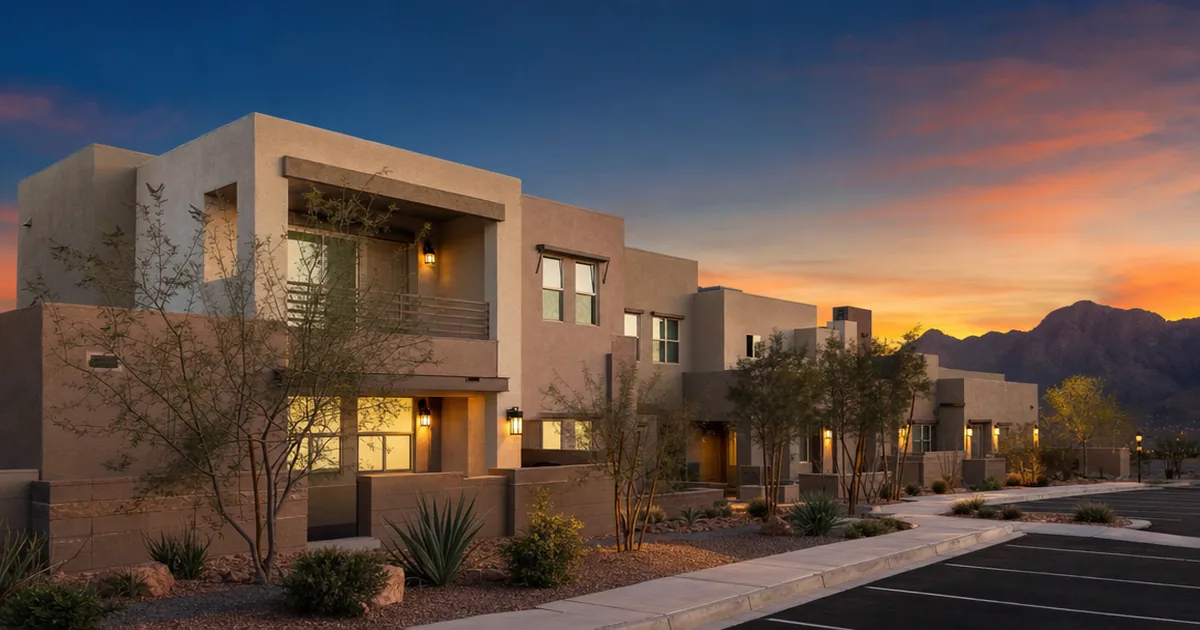
REO (real estate-owned) properties are bank-owned homes that failed to sell at foreclosure auction and reverted to the lender. With Nevada ranking second in the nation for foreclosure rate in Q3 2025, Las Vegas buyers have access to more REO inventory than most U.S. markets, along with a real opportunity to purchase below market value with clear title and traditional financing. This guide covers how to find, evaluate, and close on an REO property in Las Vegas. For a broader look at the home purchase process, see our Las Vegas home buying guide.
Key Takeaways
- Nevada ranked #2 nationally for foreclosure rate in Q3 2025, 1 in every 831 housing units had a foreclosure filing (ATTOM Data Solutions, October 2025).
- FHFA research found REO properties sell at an average 14% discount to comparable non-distressed homes after controlling for property condition and location (FHFA Working Paper 13-1, 2013).
- National REO repossessions rose 27% in 2025 to 46,439 properties, signaling growing inventory (ATTOM, January 2026).
- REO properties come with cleared title, liens and unpaid taxes are resolved by the bank before the sale, reducing legal risk for buyers.
- A September 2025 HUD report found that 47.7% of government REO sales went to owner-occupants, not investors (HUD Report to Commissioner, 2025).
Nevada Has the Nation’s Second-Highest Foreclosure Rate, What That Means for REO Buyers
Nevada ranked second nationally for foreclosure rate in Q3 2025, with 1 in every 831 housing units carrying a filing, while Clark County logged 1,290 notices of default in H1 2025, up 28% year-over-year (ATTOM Data Solutions; UNLV Lied Center for Real Estate, 2025). For Las Vegas buyers, that elevated rate means more REO inventory than in most U.S. markets.
The Las Vegas–Henderson metro ranked third among all U.S. metro areas with populations exceeding one million, at 1 in every 1,914 housing units with a foreclosure filing (ATTOM Data Solutions, August 2025). When properties enter foreclosure and fail to sell at auction, the lender takes title, creating the pool of bank-owned homes available for purchase. A market with a higher foreclosure rate produces more of this inventory.
Citation: Nevada’s Q3 2025 foreclosure rate of 1 in 831 housing units placed it second nationally, behind only Connecticut (ATTOM Data Solutions, October 2025). Clark County’s H1 2025 notices of default reached 1,290, a 28% increase year-over-year (UNLV Lied Center for Real Estate, 2025). Las Vegas ranked third among major metros. Together, these figures make Las Vegas one of the most active REO markets in the country for buyers willing to navigate the process.
How Much Below Market Value Do REO Properties Actually Sell For?
FHFA research found REO properties sell at an average 14% discount to comparable non-distressed homes after controlling for property size, age, location, and condition, the most rigorous government-issued figure available (FHFA Working Paper 13-1, 2013). The widely cited 30–40% unadjusted gap largely reflects the below-average condition of REO homes, not pure negotiating leverage.
The practical implication: you are buying a discount on condition, not automatically a windfall deal. A home priced 15% below market that needs $30,000 in repairs may be priced precisely at fair value. The discount becomes a genuine advantage when your renovation costs are lower than the price reduction, or when you can manage rehabilitation yourself.
Buyers who anchor their offer price to list price alone routinely overpay. The correct benchmark is the after-repair value (ARV): what the home would be worth in good condition, minus the cost to get it there. Commission a professional home inspection before making an offer, and get contractor bids for any major systems issues the inspector identifies.
Citation: The FHFA’s controlled analysis of REO sales (Working Paper 13-1, August 2013) found the average price discount to be approximately 14% after adjusting for property characteristics. The commonly cited 30–40% unadjusted gap reflects condition differences as much as pricing leverage. Buyers should obtain inspection reports and contractor estimates before concluding any REO listing is underpriced relative to its repair needs.
What Are the Real Benefits of Buying an REO Property in Las Vegas?
Distressed property sales, REO and short sales combined, represented 6.6% of all U.S. home transactions in both 2024 and 2025 (ATTOM 2025 Year-End Home Sales Report). REO properties within that segment offer structural advantages over foreclosure auctions: cleared title, access to traditional financing, and the ability to conduct a standard home inspection before committing to purchase.
Cleared Title Before listing an REO property, the bank resolves outstanding liens, unpaid taxes, and title disputes. This is a significant advantage over buying at foreclosure auction, where title complications can follow the property to the new owner. REO buyers receive a clean chain of title, backed by a bank with the legal resources to have cleared it.
Traditional Financing Available Unlike auction purchases that typically require full cash payment at the time of sale, REO properties can be financed with conventional mortgages, FHA loans, VA loans, and renovation loan products. FHA 203(k) loans allow repair costs to be rolled into the mortgage, making distressed properties accessible to buyers without deep reserves.
Inspection and Appraisal Rights REO sales allow for standard buyer due-diligence tools: professional home inspection, appraisal, and title search. You see what you are buying before you close, a right that foreclosure auction buyers do not have.
Negotiation Room Banks carry REO properties as non-performing assets on their balance sheets. While they price based on internal broker price opinions (BPOs) and appraisals, there is often room to negotiate price credits, closing cost contributions, or extended escrow periods, particularly for properties listed more than 30 days.
For related distressed-property strategies in the Las Vegas market, see our guides on abandoned properties in Las Vegas and tax deed sales in Las Vegas. For broader context, see our las vegas foreclosures.
Where to Find REO Properties in Las Vegas
Fannie Mae’s REO inventory stood at 7,179 properties nationally at the close of Q2 2024, down 96% from its 2010 peak of 166,787 units (Fannie Mae quarterly data, 2024). That lean national inventory means Las Vegas REO listings move quickly; knowing all available channels gives buyers a meaningful first-mover advantage. For more on this topic, see our abandoned properties las vegas.
Multiple Listing Service (MLS) REO properties appear on the MLS alongside traditional listings. An agent experienced in distressed sales can filter for bank-owned properties and configure alerts for new inventory. MLS listings include disclosures, days-on-market data, and prior inspection reports when sellers make them available.
Direct Bank Portals Major lenders, including Wells Fargo, Chase, and Bank of America, maintain searchable REO portals on their websites. Listings sometimes appear there before reaching the broader MLS, giving early-movers a competitive edge.
Fannie Mae HomePath Fannie Mae’s HomePath program offers its REO inventory with a buyer-friendly feature: the First Look period grants owner-occupants an exclusive 30-day window to submit offers before investors can participate. This makes HomePath one of the strongest entry points for non-investor buyers.
HUD Home Store The U.S. Department of Housing and Urban Development sells FHA-insured REO properties through HUDHomeStore.com. A September 2025 HUD report tracking 6,872 post-sale transactions found that 47.7% went to owner-occupants, evidence that these programs are not exclusively the domain of investors.
Freddie Mac HomeSteps Freddie Mac’s HomeSteps program mirrors HomePath with its own REO inventory and owner-occupant priority purchasing periods, along with potential financing incentives for qualifying buyers.
Step-by-Step Guide to Buying an REO Property in Nevada
Nevada’s average foreclosure timeline is 2,667 days, second longest in the nation, meaning the bank has typically held an REO property for years before listing it (ATTOM Q3 2025). That motivated-seller dynamic shapes the entire buying process: banks want to close quickly, and buyers who arrive pre-approved with clear terms win.
Step 1: Get Pre-Approved for Financing Bank sellers strongly prefer buyers with mortgage pre-approval or proof of funds. Pre-approval signals that you can close without delays, critical to a lender looking to remove a non-performing asset from its books. If the property needs work, ask your lender about FHA 203(k) or conventional renovation loan products, which fold repair costs into the mortgage.
Step 2: Work with an REO-Experienced Agent REO transactions involve bank-specific addenda, asset management companies as intermediaries, and approval chains that differ from standard purchases. An agent who has closed REO deals knows how to navigate these layers without triggering delays or losing the deal to a competing offer.
Step 3: Order a Home Inspection REO properties are sold as-is. The bank will not make repairs, but a professional inspection gives you documented leverage for price negotiations and a realistic picture of your renovation budget. Commission independent contractor estimates for any major systems issues the inspector identifies, HVAC, plumbing, electrical, and roof are the most common cost drivers in Las Vegas REO properties.
Step 4: Submit a Competitive Offer Research recent comparable sales, not list prices, to price your offer correctly. Banks use internal BPOs and appraisals; significantly lowball offers will be rejected without a counteroffer. For properties listed more than 30 days, there is more negotiating room. Quick-close terms and a strong earnest money deposit can make your offer more attractive without raising the price.
Step 5: Negotiate Credits, Not Repairs Because banks sell as-is, asking for repairs is rarely productive. Instead, request a price reduction or closing cost credit backed by specific dollar amounts from contractor estimates. Frame the negotiation in concrete numbers, not general concerns.
Step 6: Purchase Title Insurance Although banks clear title before sale, purchase an owner’s title insurance policy. REO title chains can contain gaps from the foreclosure process, and title insurance protects you if any prior claim surfaces after closing.
Step 7: Close REO closings typically take 30–60 days from offer acceptance. Bank internal approval chains add steps not present in traditional purchases, build buffer time into your contingency deadlines. Stay in close contact with your lender and agent throughout the escrow period to catch issues before they become delays.
What to Watch Out For When Buying a Las Vegas REO Property
REO properties are sold as-is, and Nevada’s extreme heat accelerates deferred maintenance in vacant homes, particularly HVAC systems, pool equipment, and roofing. Nationally, 3% of existing-home sales in early 2025 were distressed properties (NAR, March 2025), meaning well-priced REOs in desirable neighborhoods attract real competition despite lower general buyer awareness. Explore further in our tax deed sales las vegas.
Condition Issues Specific to Las Vegas Vacant homes in the Mojave Desert face accelerated wear: HVAC systems that have not cycled in years frequently need replacement, pool equipment left unmaintained can cause significant structural damage, and flat roofs are vulnerable to thermal stress. Budget conservatively for these systems before you make an offer.
Utility Access for the Inspection Many REO properties have utilities disconnected. Your agent must coordinate with the bank’s asset manager to restore utilities temporarily for the inspection. Plan for this added step in your timeline, it can add several days to the inspection scheduling window.
Multiple-Offer Competition Well-priced REO properties in sought-after Las Vegas zip codes attract multiple offers quickly. Have your financing documentation ready before you identify a property, not after, and be prepared to move within 24–48 hours of a property appearing on the MLS.
Bank Response Times Expect 5–10 business days per round for bank responses to offers, counteroffers, and credit requests. This pace is typical and not a negotiating signal, it reflects the bank’s internal approval process. Build this into your expectations rather than interpreting it as indifference.
Citation: Nevada’s average foreclosure-to-REO timeline of 2,667 days (Q3 2025) ranks second longest nationally, per ATTOM Data Solutions. That extended timeline means banks have been carrying these assets for years and are motivated to close efficiently. Buyers who bring clean offers, pre-approved financing, minimal contingencies, and documented inspection findings, consistently outperform those who negotiate sequentially from a weaker initial position.
Frequently Asked Questions
What is an REO property?
An REO (real estate-owned) property is a home that went through foreclosure, failed to sell at the public auction, and is now owned directly by the lender, typically a bank, credit union, or government entity such as HUD or Fannie Mae. The lender lists the property for sale, usually through a real estate agent and the MLS, and manages the transaction through an asset management company.
How much below market value do REO properties sell for in Las Vegas?
Controlled research by the FHFA (Working Paper 13-1) found an average adjusted REO discount of approximately 14% compared to comparable non-distressed homes. The often-cited 30–40% unadjusted gap largely reflects the below-average condition of REO properties rather than pure pricing leverage. The actual discount you capture depends on the specific property’s condition and how accurately the bank has priced it relative to repair costs.
Can I get a mortgage to buy an REO property?
Yes. Unlike foreclosure auction purchases that typically require full cash payment, REO properties can be financed with conventional mortgages, FHA loans, VA loans, and renovation loan products such as the FHA 203(k). The property must meet minimum condition standards for most loan programs, a professional home inspector can help you determine whether a specific REO will qualify before you commit.
How long does it take to close on an REO property in Nevada?
REO purchases typically close within 30–60 days of offer acceptance. Bank internal approval chains, offer review, counteroffers, addenda processing, and title clearing, add steps not present in a traditional transaction. Build additional buffer time into any contingency deadlines you negotiate, especially for properties that involve title complications.
What government programs sell REO properties to buyers?
Fannie Mae’s HomePath and Freddie Mac’s HomeSteps programs offer owner-occupant priority periods, typically 30 days, before investors can submit offers. The U.S. Department of Housing and Urban Development sells FHA-insured REO properties through HUDHomeStore.com with potential incentives for qualifying buyers. A September 2025 HUD report found that 47.7% of government REO sales went to owner-occupants, confirming these programs are accessible to non-investor buyers.